The Courage Project
Stories of courage in parenthood, a series brought to you from The Motherhood Project
It probably sounds cliched but one of my key life goals from a young age, was always to have a large and happy family. Full of noise and chaos, big kids helping out with the little ones, with everyone sliding into bed each night exhausted from the day’s activities!
The universe, however, had other ideas on how that particular plan would play out…

Like others, I went through my twenties and early thirties in and out of short and long-term relationships. It wasn’t until I moved back home from 10 years overseas (age 35), that I met my darling husband to be. We knew early on that we wanted to spend out life together, so much so, we got engaged 10 months after meeting, and married 10 months after that. It was a glorious, floating-on-cloud-nine kind of time! We started trying to get pregnant straight after our wedding. I did all the pre-prep, coming off the pill, reducing alcohol intake, getting regular exercise. I studied up on what to look out for, for that magical ovulation window, used different remedies, made sure hubby and I had the time together we needed to ‘seal the deal’, so to speak. In the back of my mind, I was always conscious that I was 37 years old and my biological clock was ticking.
Two months after our wedding, we went on our honeymoon to Europe. We had a lovely time, but I still kept a close eye on my cycle and when we needed to be action stations (let’s be honest, when you’re on a mission to get pregnant, some of the romance goes out of the picture!). However, each month I got my period and so on my return, I booked in to see a fertility specialist, just to run the standard checks, to make sure everything was working as it should. I did all the tests and waited for a call back from our specialist. I received that call, whilst at work and took it in the work carpark (fully thinking the news would be fine considering he was calling on the phone, rather than discussing face-to-face in his office).
“It felt like a large part of me and my purpose in life had just died.”
That call was the start of an incredibly tough journey, emotionally, mentally and financially. One that would consume (particularly) me for the best part of the next year and a half. On that call, in our work car park, I was told that my AMH levels (a blood test that estimates your ovarian reserves) didn’t even register on the scale. Essentially, I was told that my dream of having my own child, let alone a large family, was gone.
It felt like a large part of me and my purpose in life had just died.
Needless to say, I left work for the day, went home and rang mum. I wanted to ring my husband, but felt too ashamed. I felt that my body had failed me and that now we wouldn’t be able to have a family together. My world collapsed. Poor mum, all she could hear was me sobbing my heart out, trying to make sense of what had just happened. I lay on the couch in a fetal position and just cried.
Mum managed to get hold of my husband and got him to come home. By the time he arrived, I was lying on the couch in shock. I barely spoke. The tears had gone. I was numb. I didn’t know how to process this and neither did my husband. The next emotion to come flooding in was one of anger. Anger that the specialist didn’t have the emotional intelligence to deliver the news to both of us together, in a more sensitive time & place. On the phone, whilst I was at work, on my own, was horrendous.
We subsequently changed fertility specialists and, not wanting to give up, started getting a plan together of next steps.
“I was lying on the couch in shock. I barely spoke. The tears had gone. I was numb. I didn’t know how to process this and neither did my husband. The next emotion to come flooding in was one of anger. ”
Our new specialist ran more tests and gave us a concise overview of what our options were, going forward, as well as what our realistic (slim) chances were of conceiving via IVF. I also had surgery to remove a malfunctioning left ovary. Post-surgery, our specialist could see that I had a small window of opportunity, but that we’d have to move quickly. The costs started to build, as we went straight into three privately paid rounds of IVF, as we couldn’t wait over 12 months for the first publicly funded round, let alone 18 months for the second.
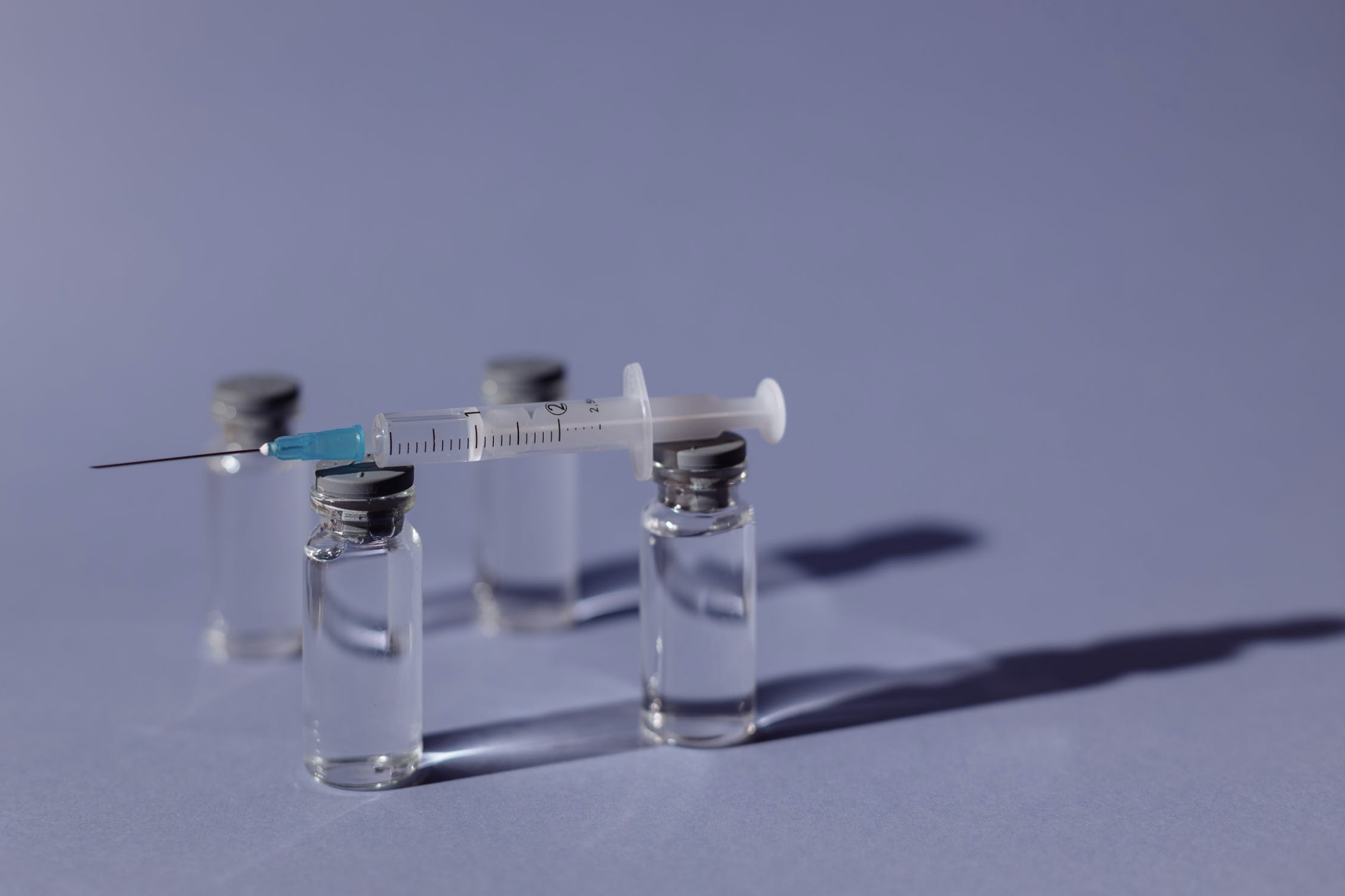
I got into the rhythm of injecting myself daily to stimulate my body to produce as many eggs to ‘ride the wave’ each month, as our specialist coined it. Although I was only working off one ovary, in the first round, they collected two eggs and endeavoured to fertilise them with my husband’s sperm. Only one survived the first night, but didn’t make it to the second night. It was heart-breaking. Yet again I felt like my body was failing, like I was letting my husband down.
This was tough.
“That’s officially the end of me having my own children. How on earth do I process and put to bed that life-long dream? ”
After a month off to give my body a break and try to get my head in a positive mind frame again, we had two more rounds. The second resulted in only two eggs again, both of which didn’t survive past day 2 and the third round was abandoned before harvesting as I only produced one egg and given the previous cycles, the likely outcome wasn’t in our favour.
Great. That’s officially the end of me having my own children. How on earth do I process and put to bed that life-long dream?
After discussing remaining options with our specialist and weeks of my own internal dialogue, and discussions with my husband, we made the decision that if I couldn’t have my own children, the next best thing would be finding donor eggs, so 1) my husband could be in our children, and 2) so I could carry them, thereby helping me to bond with them.
Due to regulatory restrictions in New Zealand around donors not being allowed to be paid for donating eggs / sperm, we knew how hard it might be to find someone willing to donate eggs to us. Further the process in NZ is a lot more complicated than overseas, with donors not allowed to donate until after they have had their family (thereby reducing the quality of the eggs) and also donors have the right to be involved in the child’s life, as they grow up.
“We had set up an anonymous Facebook donor page and asked friends to share it to their friend groups, in the hope that someone might be willing to give their precious eggs and time to help us have a family. ”
After much consideration, we decided to bravely share our infertility journey with close friends and tell them that we were now looking for a donor. We had set up an anonymous Facebook donor page and asked friends to share it to their friend groups, in the hope that someone might be willing to give their precious eggs and time to help us have a family.
We were blown away to receive two generous offers, but after much discussion around the possible long-term complications given we knew the people involved, plus the added complications of New Zealand donor regulations, we decided to continue our search overseas, where there are many successful donor clinics.
We are lucky that a number of other countries have really embraced donoring for assisting fertility journeys. I carried out extensive research into the various donor clinics in America, South Africa, Russia and other locations, looking into factors such as the information you receive about donors (medical history, character etc), costs, anonymity, success rates etc.
We settled on San Diego Fertility Clinic, which has one of the highest success rates (80%) in the world for donor eggs, was open to putting two eggs back, and which had great reviews from others I had talked to in NZ in terms of their processes and amount of information they offered about the donor. They also worked with our fertility clinic here in NZ, so it all seemed to line up. Their cost was the highest out of all the clinics, but we felt they also offered the best chance of success.
For the first time in 18 months, I felt we had turned a corner and things were looking up. There was a bit of prep to get through before we could organize our trip to San Diego.
We had to do a dummy cycle with fertility drugs to ensure my womb would be suitable for receiving and growing a baby. Once SDFC were happy with that, we selected a donor from their list, they checked if they were available and then we had to sync with their cycle.
We threw absolutely everything at this to make it work, so on the side, we saw a naturopath to really ensure both our bodies were in tip-top condition. Also, with San Diego’s approval, I did a course of Intralipids, which is a natural infusion to help reduce the natural killer cells (your immune system) in your womb. I have quite a strong immune system, so I thought this was necessary and quite frankly, wanted to do whatever we could to help increase our chances of this working. It was yet another expense, but I thought it would be worth every cent.
We exercised, ate well, spent QT time together and quietly felt positive about the journey ahead. It felt good.
Four months later, we were on a plane to San Diego for the required two-week period. We arrived, met with the clinic and ran through the process over the next few days. On the day of the transfer, with no romance at all, my hubby had to deposit his sperm into a jar, before we took off down the road to the clinic. At the same time, our donor was at the clinic getting ready for her egg collection. We arrived, handed over the jar, and let the specialists weave their magic. After this, it was just a waiting game to see how many eggs had successfully fertilized.

Our donor, who had donated a number of times before, had amazingly given us 30 eggs on that one cycle, which resulted in 9 healthy, strong embryos. San Diego FC chose the strongest two and inserted them into my womb. We weren’t allowed to fly for a week after insertion, so we were lucky to have a week of relaxing in and around La Jolla, a surf & yoga town north of San Diego where we were staying in an AirBnB. It was heaven and helped us to stay positive and calm whilst we hoped the little embryos nestled into my womb.
On return to NZ, I had to go for a day-11 blood test and was very pleasantly surprised to hear my HCG levels were very high, which meant that one, if not both embryos had definitely attached and was starting to grow. After all the initial turmoil, it was so hard to not get too excited as it was still very early days.
Four days later, I went back for another blood test, and again, my levels had increased significantly. Next stop was a week six scan. Naturally the nerves were racing, but I was trying so hard to remain calm.
At six weeks we had our first scan and, amidst tears, relief and excitement, we saw not one, but two strong little heartbeats. Finally, I was pregnant! Finally, after everything we put into this, we were going to have our family, and twins at that! We felt so blessed. We just needed to get through the first trimester. I had an intense gut feeling that we were going to do this, that this was going to work.
I was lucky enough to have a good pregnancy and at 33.5 weeks, our little twins were born. Slightly prem, but you wouldn’t know that now at all. We had exceptional care at Auckland Neonatal Intensive Care Unit and that definitely helped us get into a routine with them at home.
I’ll be honest, in the first year after our twins were born, it took a while for me to feel like they were mine (not being my eggs), as I didn’t feel like they looked a lot like me, but now I wouldn’t even think twice about it, even when they are little terrors! We love them to pieces and are so happy that we did everything we could to have them.
Despite the fact I wasn’t able to use my own eggs, I feel incredibly lucky to have had the option to still have children via donor eggs. We are hugely grateful to our donor (who chose to remain anonymous) and San Diego Fertility Clinic for their amazing donor service and care. Plus, for me, carrying our twins in my womb, really helped me bond with them.
Infertility is so tough. It’s a different journey for everyone, and it can put a huge strain on your relationship, your mental wellbeing, your finances and sometimes, your friendships as those around you often don’t know what to say or do. We put absolutely everything into having our family. We bravely opened up to those near to us and were lucky to have amazing emotional and financial support of family and close friends.
When you find that something in your / your partner’s body just isn’t working as it should, it’s great to know that there definitely are other ways to bring your dream of a family to life.